

Due diligence interviews are some of the most information-heavy conversations that financial advisors and legal teams ever have. A founder might jump from a pending lawsuit to quarterly revenue figures in the same breath. Missing even one specific number or legal condition can change how a deal gets valued or how much risk a firm takes on.
Many advisory teams still rely on manual notes during these sessions. That approach creates real problems. This article explains what those problems are, why generic transcription tools do not solve them, and how purpose-built software like Comulytic Note Pro supports a more reliable documentation workflow.
Why Due Diligence Interviews Are So Hard to Document
Most interview subjects do not speak in a neat, organized order. They jump between topics. They attach conditions to numbers. They mention legal issues in passing. Every one of those details can affect the final valuation or liability assessment.
The person taking notes faces a difficult choice. They can try to write down everything quickly, which means they stop listening closely. Or they can focus on listening, which means the notes end up thin and incomplete. There is no way to do both well at the same time.
Research on how people process information consistently shows that writing and deep listening compete for the same mental resources. When someone is focused on getting words onto paper, they are less able to absorb and analyze what comes next. In a fast-moving financial interview, that gap shows up in the final notes as missing figures, missing conditions, and missing context.
Three Real Risks That Come From Manual Documentation
Risk 1: Key details get left out. When a founder mentions that a software license is currently in litigation, a note-taker under pressure might write down "licensing issue" and move on. Those two descriptions carry very different legal weight. The note-taker is making a judgment call about relevance in real time, and that judgment is often wrong. Once the interview ends, there is usually no way to recover what was not written down without going back to the target company.
Risk 2: Teams end up working from different versions of the same conversation. Due diligence involves legal counsel, financial analysts, and operations specialists all reviewing the same interviews. When each person relies on their own handwritten notes, the records do not match. Legal notes might focus on regulatory exposure. Financial notes might focus on cash flow. When teams try to cross-reference these accounts, they often find conflicts. That slows down the entire verification process and forces extra reconciliation meetings.
Risk 3: Manual notes do not hold up in regulatory reviews. If external auditors or regulators review a transaction, they expect objective, attributable documentation of what was disclosed and when. A summary written from memory, or a set of handwritten notes with no timestamps, rarely meets that standard. Firms that cannot produce a precise record of material statements made during due diligence interviews carry higher post-transaction liability risk.
Why Generic Transcription Tools Do Not Fix the Problem
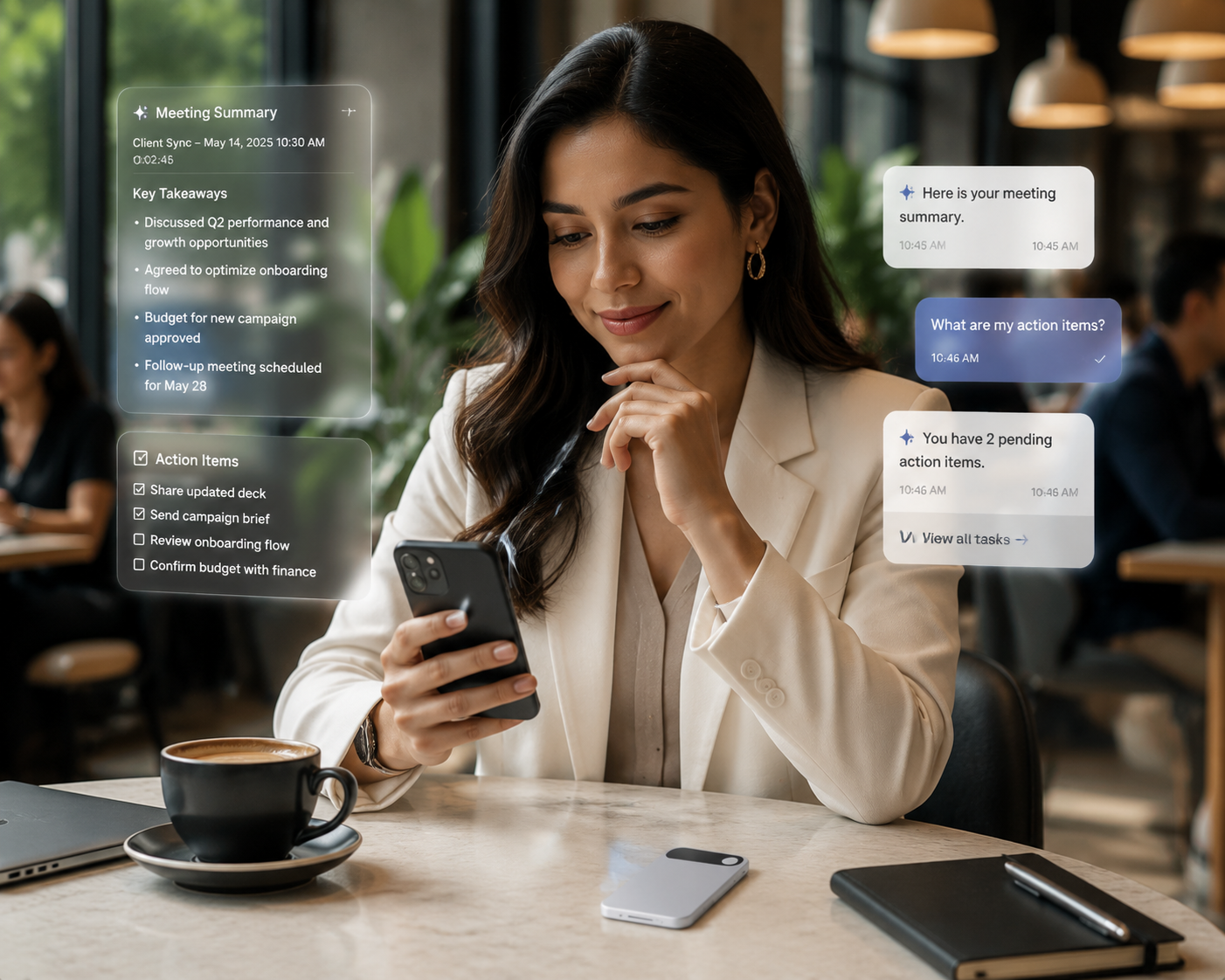
Some advisory teams try to solve this by using free or consumer-grade voice-to-text apps. These tools work reasonably well for casual dictation, but they struggle in professional financial settings.
They do not recognize specialized vocabulary. Corporate tax acronyms, legal qualifications, and technical engineering terms often get transcribed as phonetically similar but factually wrong words. The advisor then has to go back to the audio file and manually correct the output, which takes just as long as writing notes in the first place.
They also stop at raw text. Even when accuracy is acceptable, the output is an unformatted block of paragraphs with no structure. Financial analysts and legal teams need organized, searchable records, not a wall of text they have to read from start to finish to find one figure.
What a Purpose-Built Documentation Workflow Looks Like
Professional advisory teams need more than a transcript. They need a system that turns interview recordings into searchable, structured records they can actually use.
That means being able to search for a specific phrase, like the exact wording around an indemnification clause, without reading through the entire document. It means having risk factors and financial commitments organized in a way that feeds directly into report drafting. It means keeping that documentation connected across multiple sessions with the same target company.
Static text files sitting on a local hard drive do not support that kind of workflow. Active deal teams need systems that integrate with how they already work.
How Comulytic Note Pro Fits Into This Workflow
Comulytic Note Pro is built for exactly this kind of professional documentation environment.
The hardware records the session offline. After the interview, audio transfers to the companion mobile app over Bluetooth or Wi-Fi. The audio is then processed through cloud-based transcription, and the resulting transcript is indexed and made searchable within the platform. Audio files are stored locally on the user's phone. Cloud backup is optional and controlled by the user. Transcripts are retained on both the phone and the cloud, with cloud retention being time-limited.
Recording, transcription, and basic meeting summaries are included after the hardware purchase, with no ongoing fees for those core functions. Advanced capabilities, including deep analysis, risk categorization, compliance indexing, and client relationship mapping, are available through the subscription tier. For firms running high-frequency transaction work, the subscription cost is typically offset by the reduction in manual post-processing hours across the deal team.
Frequently Asked Questions
How do you protect confidential data during due diligence transcription?
Software selection in M&A environments is driven by confidentiality requirements. Some consumer transcription platforms use uploaded audio to train their own models, which creates a direct conflict with standard non-disclosure agreements.
Advisory teams should verify that any platform they deploy uses encryption during transmission and storage, maintains clear data retention policies, and operates under a stated prohibition on using client data for model training. Comulytic meets these criteria. Audio is captured on dedicated hardware, transferred to the companion app over an encrypted connection, processed through cloud-based transcription, and retained under a policy that does not use customer data for model training. Users who want to limit cloud exposure can opt out of cloud backup and keep recordings and transcripts on-device.
Advisory teams should also confirm recording consent requirements before any session begins. Consent laws vary significantly by state. Some states allow recording with the consent of one party. Others require all participants to consent before recording is lawful. In multi-jurisdictional interviews where participants are located across different states, the most conservative applicable standard should govern. Legal counsel should be consulted to confirm compliance with the recording laws of every jurisdiction involved.
How do you turn long transcripts into structured summaries for due diligence reports?
Processing a full verbatim transcript manually delays the drafting phase. Purpose-built platforms address this by organizing the raw text output into categorized sections, separating financial commitments, pending legal obligations, and operational timelines. Comulytic Note Pro allows advisory teams to move from a completed interview directly into structured analysis, reducing the time spent on manual cross-referencing before the final report is drafted.
What should advisory teams do to get the best results from recorded interviews?
Hardware quality matters. Relying on a laptop's built-in microphone in a conference room produces a poor signal, especially when multiple people are speaking at different distances. Using dedicated recording hardware placed in a central position improves the base audio quality that the transcription model works from.
For sessions with significant background noise, such as interviews conducted at a client's office, in a coffee shop, or during travel, Comulytic Note Pro's hardware is optimized for professional ambient environments. In very high-noise conditions, transcription accuracy may be affected, as with any recording tool, but the hardware performs reliably across the everyday professional settings where most due diligence interviews take place.
Closing
Due diligence documentation is not just an administrative task. It is a direct input into valuation, liability assessment, and regulatory compliance. When that documentation is built on incomplete manual notes or unstructured text from a generic app, the downstream effects show up as missed details, slower team alignment, and weaker evidentiary records.
Purpose-built transcription tools address each of those failure points. They capture what was actually said, structure it in a way that supports analysis, and keep it organized across the full lifecycle of a transaction. For advisory teams working on complex deals, that kind of reliable documentation is not a convenience. It is a core part of doing the work right.